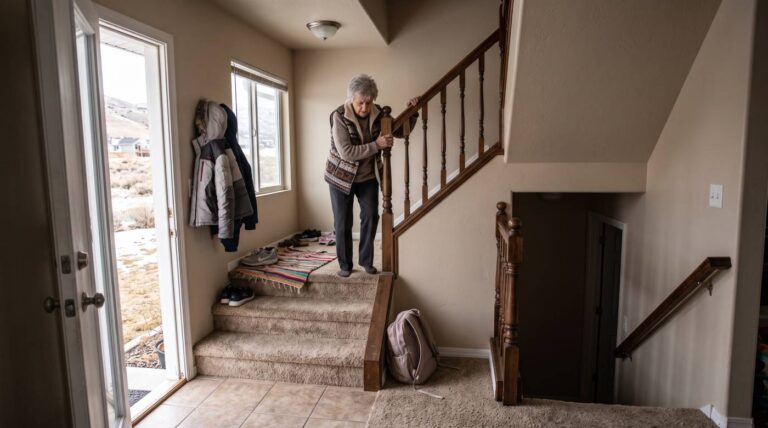
There are a hundred pages on the internet telling you Medicare will not pay for a stair lift. Almost none of them tell you what will.
So: the short answer, then the useful one.
Short answer. Original Medicare does not cover stair lifts. Not partially, not with a doctor's letter, not on appeal.
Useful answer. In Utah there are four other routes worth checking, and one of them has a phone number you can call this afternoon.
Why Medicare says no, and why the reason matters
Medicare Part B covers durable medical equipment — wheelchairs, walkers, hospital beds. The test is whether the thing is medical equipment.
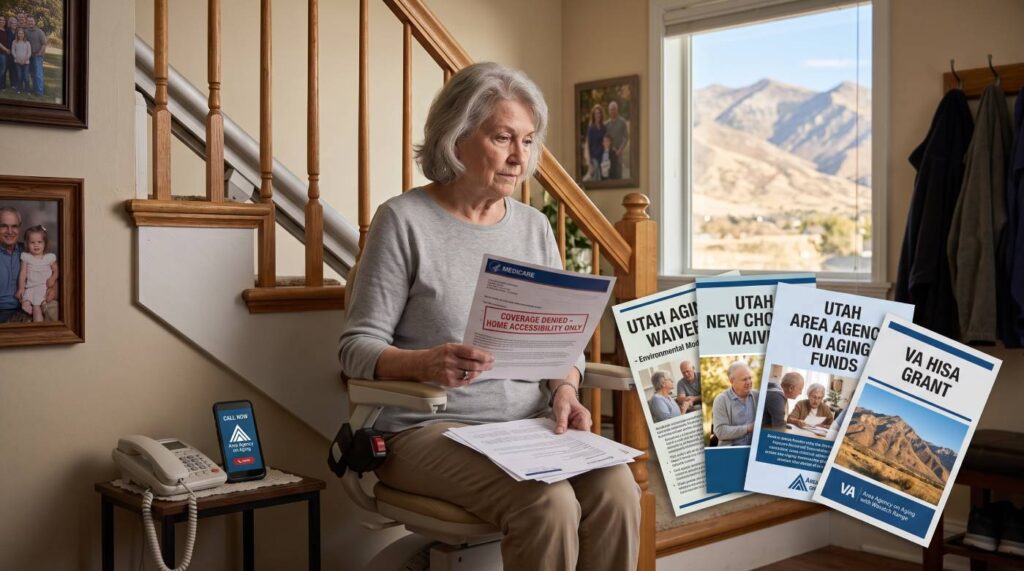
A stair lift bolts to your staircase. So Medicare files it alongside ramps, grab bars and widened doorways: a home modification, made for accessibility rather than treatment.
That is a technicality. It is also settled. Arguing it costs you months, and if someone has already had a fall, you do not have months.
One exception worth ten minutes. Some Medicare Advantage (Part C) plans carry small fall-prevention or home-safety benefits. It is uncommon and it rarely covers much, but it varies plan to plan, so it is worth the call. Ask about home safety modifications — if you ask about stair lifts, you will get a no before you finish the sentence.
What you are actually funding
Nationally, a new stair lift runs about $2,500 to $8,000 installed. Used models sit around $2,000 to $3,000. Rental is roughly $300 to $500 a month.
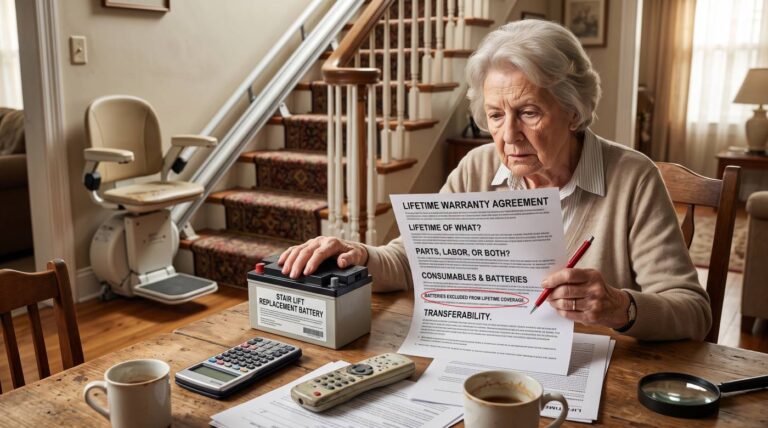
Write the rental figure down. If the stairs are a problem because of a hip replacement or a course of treatment that ends, renting for four months beats buying and reselling at a loss. A company that will not talk to you about renting is telling you something.
The four Utah routes worth checking
1. Utah's New Choices Waiver
A Medicaid home and community-based services waiver, and it does cover home modifications for safety and accessibility.
The catch is the front door. New Choices is built to move people out of institutions, so it generally requires a prior stay — 90-plus days in a nursing home, or a year or more in assisted living. If your mother is at home and has always been at home, this is probably not your route.
The 2026 financial limits are $2,982 a month in income and $2,000 in assets for a single applicant, $4,000 for a couple.
Apply through UtahID, or call 800-662-9651 and choose option 6.
2. The Utah Aging Waiver
For adults 65 and over who need a nursing-facility level of care and meet the Medicaid financial rules. Environmental accessibility modifications are an eligible service under this one.
This is the waiver most families in this situation should be asking about first.
3. Your Area Agency on Aging
Utah's State Unit on Aging passes Older Americans Act money down to Area Agencies on Aging, and those funds can be used for home modifications and repairs. It is not a large pot and it is not guaranteed, but it is not means-tested to Medicaid levels either.
Weber-Morgan's Alternatives Program is the clearest example: adults 60 and over, sliding-scale fees based on income and assets, services that may include home modifications. Your county's agency may run something similar under a different name. Ask.
4. VA benefits, if there is any service history at all
Three grant programs can apply: HISA (Home Improvements and Structural Alterations), SAH (Specially Adapted Housing) and TRA (Temporary Residence Adaptation).
Check this even if you think the answer is no. Plenty of families never ask because the service was sixty years ago and brief.
The two everyone forgets
HSA and FSA funds. With a physician's prescription, a stair lift is generally an eligible expense. If there is a health savings account sitting there, this is the least painful money in the whole exercise.
State assistive technology programs. They run low-interest loans and refurbished equipment at reduced rates. Less glamorous than a grant, and a lot faster.
The order to do this in
- Call the Medicare Advantage plan, if there is one. Ask about home safety modifications. Ten minutes.
- Call your Area Agency on Aging. They know every local program and they will tell you which ones you actually qualify for.
- Ask about the Aging Waiver before the New Choices Waiver, unless there has been a nursing home or assisted living stay.
- Check VA eligibility regardless of what you assume.
- Check the HSA or FSA balance.
- Then get quotes — knowing what you can put toward it.
Do it in that order and you will not waste six weeks waiting on a program you were never eligible for.
One thing worth saying plainly
Most families in Utah end up paying for the stair lift themselves. That is the honest outcome, and anyone who implies otherwise is selling something.
But we have watched families spend $6,000 out of pocket who would have qualified for help, because nobody told them the Aging Waiver existed. The calls above take an afternoon. Make them before you sign anything.
If you want a straight quote to work against while you make those calls — no obligation, and we will tell you if renting makes more sense — ask for a free in-home assessment.