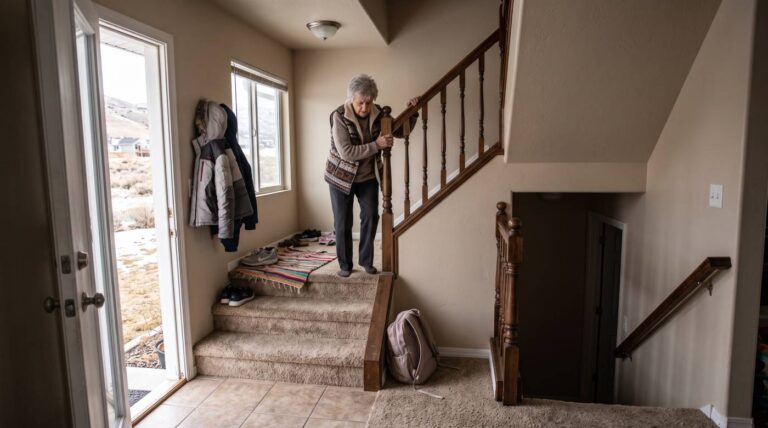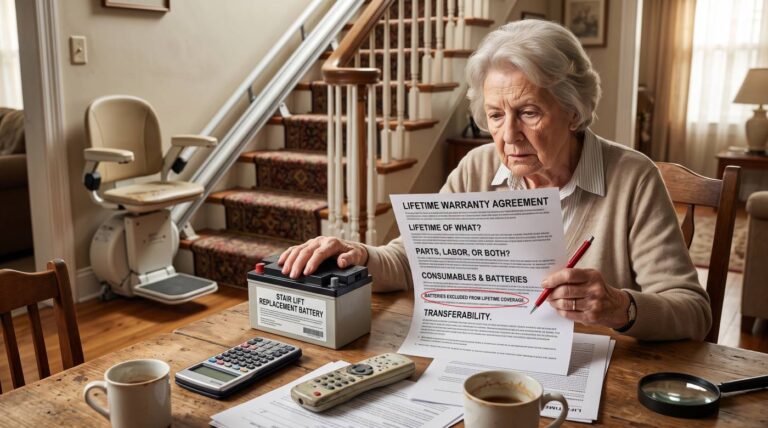
You have done the research. You have the quotes. You have found a model that fits, money that mostly covers it, and a company that can install it next month.
And your mother has said no.
In thirty years of doing this, that is the most common obstacle we see. Not cost. Not staircases. The conversation.
The refusal is almost never about the stair lift
A grab rail goes up and nobody mentions it. A walking stick lives by the door. Those can be explained away.
A stair lift cannot. It runs down the middle of the house, and everyone who visits sees it. It is the first piece of equipment that says, permanently and in public, that something has changed.
So when someone says I don't need that thing, they are usually answering a different question than the one you asked. Underneath it is normally one of four things:
- "This makes me an old person." The object is a label, and the label arrived before they were ready for it.
- "Don't waste your money on me." Very common, rarely said out loud, and it gets stronger the more you emphasise how much you are willing to spend.
- "This is the first step to a care home." They think you are building a case. Sometimes they think that because a sibling has said so.
- "This is my house." You are proposing to bolt something to it, and nobody asked them.
You cannot argue someone out of any of those with a brochure.
What does not work
Statistics. More than one in four adults over 65 falls each year. It is a real number from the CDC and it will not move anybody, because nobody thinks they are the one in four.
The safety lecture. Every repetition of "I just worry about you on those stairs" makes the lift the symbol of your worry rather than a piece of equipment. Now saying yes means agreeing they are frail.
Bringing reinforcements. Arriving with two siblings and a printed quote is an ambush, and it will be remembered as one.
Installing it anyway. We have been asked to fit lifts as a surprise. We say no. Anyone who says yes to that is not doing your family a favor.
What actually works
Give the decision back
The single most effective change is moving from "we think you should have one" to "would you be willing to look at one and tell me what you think?"
People refuse being managed. They rarely refuse being consulted.
Reframe it as keeping the house, not losing it
This is the argument that lands, and it happens to be true.
Six in ten older adults living independently say they want to stay in their own home. Only about four in ten think it will actually happen. That gap is the fear you are really talking to.
A stair lift is not a step toward leaving. It is one of the few things that makes staying possible — it keeps the bedroom, the bathroom and the whole upstairs in use. The people who end up moving are very often the ones who quietly stopped going upstairs a year earlier and started sleeping in the front room.
Say that. It reframes the lift from evidence of decline to a tool for staying put.
Ask what they have stopped doing
Less than half of older adults who fall tell their doctor. They very rarely tell their children.
So instead of "have you fallen?", which gets a no, try "is there anything you have stopped doing because of the stairs?"
That question gets honest answers. Doing laundry less often. Not going up for a nap. Bringing everything down in the morning so they only have to do the stairs twice. The answer tells you how urgent this is far better than a fall history does.
Let them meet one
An abstract stair lift is a hospital object. An actual one is a chair that moves quietly and folds flat against the wall.
Most people who see one working are surprised by how unobtrusive it is. Ask for an assessment where the person who needs it is present and is the one asked the questions — not talked around while two people discuss them in the third person.
Offer the exit
"If you hate it, we take it out." A rental for a few months, at around $300 to $500, converts a permanent identity decision into a trial.
A surprising number of trials just quietly become permanent.
If you are the one being asked
You may well be reading this over someone's shoulder, because they sent it to you.
You are allowed to say no. It is your house, and if you are managing the stairs safely then you are managing the stairs.
But it is worth separating two things. If your objection is that you do not need it yet, that is a judgment call and it is yours to make. If your objection is that you do not want to be someone who needs one — that is a different thing, and it tends to cost people the upstairs of their own home about eighteen months later.
Nobody who fits these for a living thinks less of the people who use them. It is a chair.
When to stop pushing
If the answer is still no, stop. Ask again in three months, or after the next hospital appointment, or when winter comes.
What you can do meanwhile is take the friction out of the yes. Get the assessment done so the measurements exist. Find out what funding they qualify for. Then when they are ready — and it is usually an event that decides it, not an argument — the answer is "we can do that next week" rather than another six weeks of research.
When they are ready, we can come and look at the stairs, talk to the person who will actually use it, and tell you both honestly whether it is the right call. Book a free in-home assessment.