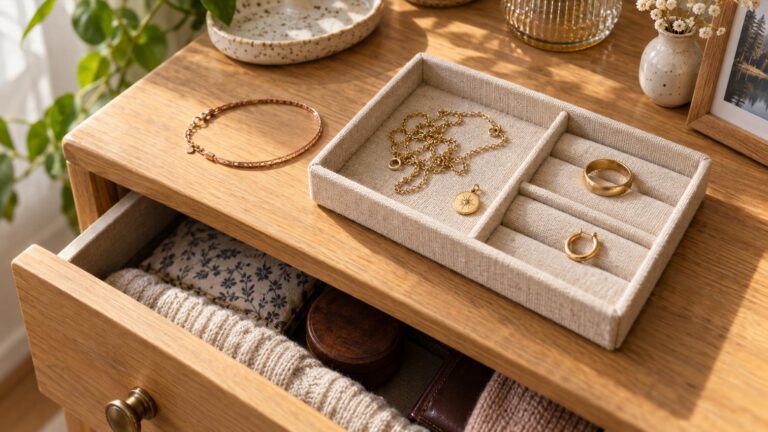
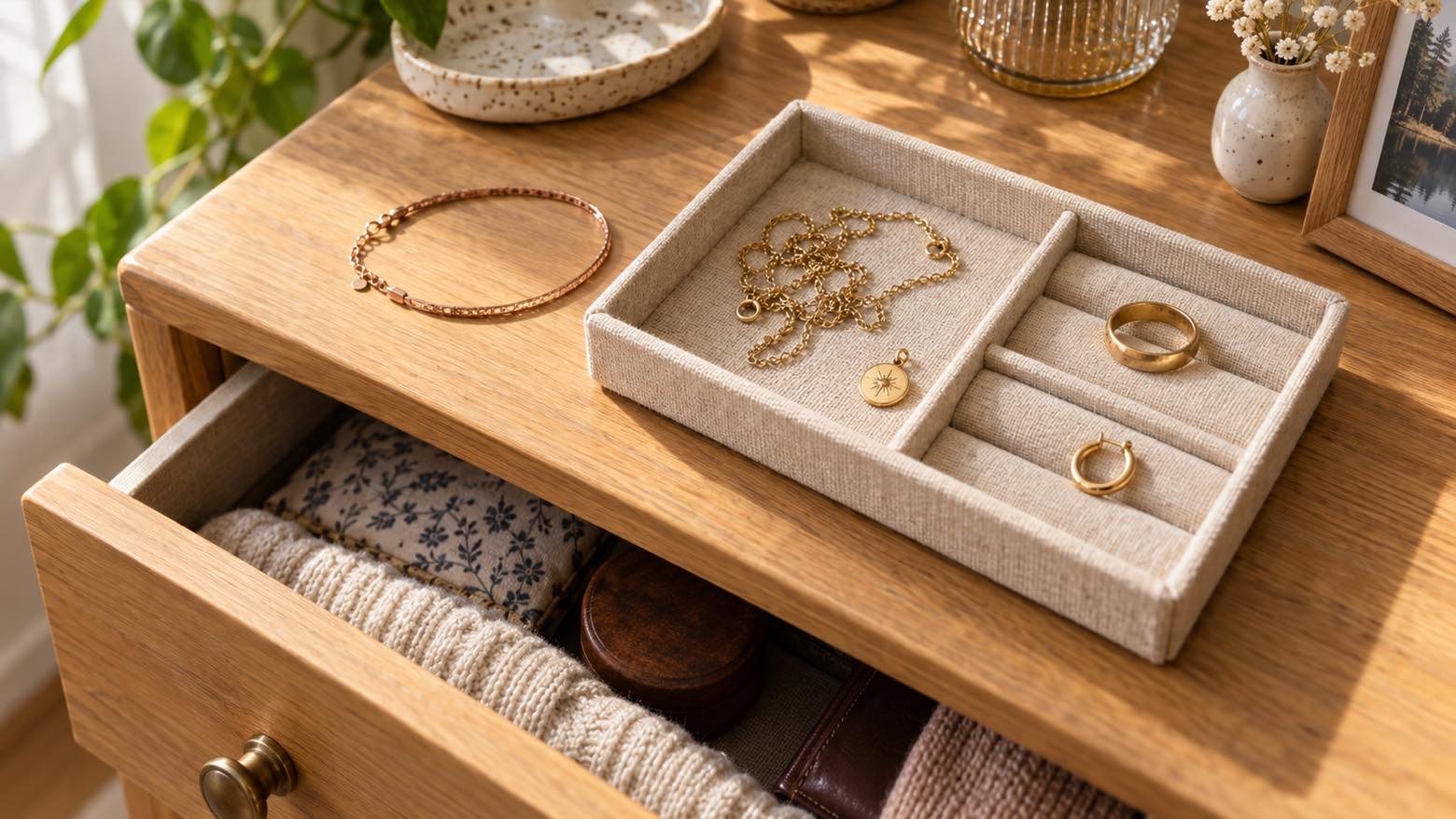
Somewhere in your home, there might be a tiny collection of things you stopped wearing but never quite threw away. The necklace with the broken clasp. The bracelet that doesn’t fit. The remaining half of an earring relationship.
If those pieces contain real gold, they could be worth getting evaluated.
You can often sell gold rings, chains, earrings, bracelets, pendants, broken jewellery, coins, bars and certain dental items for cash. What a buyer accepts depends on the material and their buying policies. Jewellery doesn’t necessarily need to be wearable, fashionable or part of a matching set. See examples of precious-metal items purchased in Canada.
For anyone looking to sell gold in Brampton, the first step can be surprisingly simple: find out what you already own.
Put the kettle on. Grab a tray. Let’s investigate that drawer.
The quick checklist: what might be worth selling?
Start with this sorting guide. “Worth checking” means exactly that: the item needs identification and an offer before you know its cash value.
| What you found | Worth checking? | What to keep in mind |
|---|---|---|
| Broken gold chain | Yes | Missing links or a failed clasp don’t remove the remaining gold |
| Single gold earring | Yes | A matching partner isn’t needed to assess its metal |
| Old gold ring | Yes | Stones, branding and design may need separate consideration |
| Gold bracelet or bangle | Yes | Hollow pieces can weigh less than they look |
| Gold pendant or charm | Yes | Small pieces can be assessed together |
| White or rose gold jewellery | Yes | Gold doesn’t have to be yellow |
| Gold coin or bar | Yes | Ask for a bullion or coin assessment |
| Gold watch or pocket watch | Ask first | The complete watch may deserve specialist attention |
| Removed dental gold | Ask first | Composition and acceptance vary |
| Gold-filled jewellery | Ask first | It contains a gold layer over another metal |
| Gold-plated jewellery | Often unsuitable for ordinary scrap buying | The complete item could still have resale value |
| Gold-coloured costume jewellery | Uncertain | Colour alone tells you very little |
🔎 Your first sorting rule
Make three piles: possibly gold, needs another look, and keeping this. That third pile is allowed. Finding something valuable doesn’t oblige you to sell it.
Where to look for forgotten gold at home
You don’t need a metal detector. You need access to the places where small objects go to retire.
Start with your jewellery box
Lift out removable trays and check the little compartments.
Look for loose pendants, damaged clasps, earring backs and rings tucked underneath something larger. Keep tiny finds in a small container so they don’t disappear again during their big comeback.
Check bedside drawers and catch-all dishes
Think about where you take jewellery off.
A ring might have moved into a bedside drawer when it stopped fitting. A necklace might be sitting beside an old phone charger because you took it off before bed and simply forgot.
Empty old handbags and travel pouches
Check zipped pockets, toiletry bags and holiday jewellery cases.
Do this over a clear table or tray. Shaking a handbag over the kitchen bin is a bold approach to treasure hunting.
Revisit the “I’ll get it fixed” collection
That broken bracelet you planned to repair three years ago deserves a decision.
You might still want it repaired. But if you no longer like it, getting a buying quote can help you decide whether to keep postponing the job.
Look through boxes from previous moves
Small jewellery boxes often end up inside larger boxes labelled “miscellaneous.”
Check your own keepsakes, old gift packaging and accessories. Keep family pieces separate until you’re clear about ownership and whether you want to part with them.
This is also a good moment to rescue any receipts, certificates or original boxes.
The gold jewellery worth checking
1. Broken necklaces and chains
A snapped chain is one of the most obvious candidates for a gold evaluation.
Perhaps the clasp failed. Perhaps it caught on a jumper. Perhaps the repair quote made you quietly put it back in the drawer.
For a metal-based purchase, the buyer is interested in the gold that remains. The chain doesn’t have to function as a necklace.
Bring any detached sections you still have. Keep matching parts together, but don’t spend your evening reconstructing them.
2. Single earrings and incomplete pairs
The missing earring may never return from wherever earrings go. The surviving one can still contain gold.
That includes studs, hoops, drops and pieces with damaged posts. Bring loose backs too, although they may be made from a different material than the earring.
Buyers that accept broken and mismatched jewellery commonly assess single earrings and damaged chains. See examples of jewellery accepted in different conditions.
3. Rings you no longer wear
Think beyond engagement rings and wedding bands.
Check for signet rings, old birthday gifts, class rings, rings that no longer fit and styles you’ve simply outgrown.
An engraving doesn’t remove the gold. Your initials can remain on the inside while someone assesses the metal.
If the ring has a substantial stone, a recognisable designer name or an unusual antique setting, keep it intact and read the second-opinion section below.
4. Bracelets, bangles and anklets
A bent bangle or bracelet with a broken clasp may still be worth evaluating.
Looks can be misleading, though. A large piece may be hollow, while a smaller one may feel unexpectedly substantial. Ask for its actual weight instead of estimating value from size.
Bring removable charms along with the bracelet, but let the buyer check them individually. A mixed collection may contain several purities or materials.
5. Pendants, lockets and loose charms
These are easy to overlook because they seem too small to bother with.
Look for initial pendants, religious jewellery, detached charms and lockets that lost their chains years ago.
Remove any photographs from a locket before considering a sale. You may be comfortable parting with the metal while wanting to keep the tiny picture inside.
Bag small pieces together for transport, then ask whether each one can be identified.
6. Brooches, cufflinks and tie accessories
The formalwear drawer deserves a turn.
A brooch you never wear or a pair of cufflinks from a different chapter of your life might contain gold. Equally, they might be plated or made from mixed materials.
Keep unusual accessories intact. Their fasteners, decorative parts and main bodies may not all have the same composition.
7. White gold and rose gold
Don’t limit your search to yellow jewellery.
White gold contains gold alloyed with other metals to produce its colour. Rose gold gets its warm tone from its alloy mix, including copper. White gold jewellery may also have a rhodium coating. GIA explains how yellow, white and rose gold differ.
A silver-coloured ring could therefore belong in your “possibly gold” pile. Its colour won’t tell you its purity or its payout.
💡 The small-stuff box
A single charm may not seem like much. Neither might half a pair of earrings. Gather the pieces you’re comfortable selling and ask for an itemised evaluation. You can then decide what, if anything, to sell.
Beyond jewellery: coins, watches and unusual finds
Gold coins and small bars
You don’t need a movie-villain vault to own bullion. A small gold bar or coin may have arrived as a gift and stayed in its packaging ever since. Keep that packaging, along with any certificate or receipt.
Ask whether the item should be valued as bullion or as a collectible coin. The Royal Canadian Mint explains that bullion value is primarily tied to precious-metal content, while collectible value can also reflect rarity, condition and collector interest. Read the Mint’s guide to bullion and numismatic coins.
Avoid polishing a coin to make it look “better” before seeking advice.
Gold watches and pocket watches
A gold-coloured watch could be plated, gold-filled, partly gold or made with substantial gold components. Its total weight also includes parts that aren’t gold.
Before accepting a metal-only offer, ask whether someone should assess the watch as a complete timepiece. Bring its box, paperwork and spare bracelet links if you have them.
Please leave the tiny screwdriver in the drawer. Taking a watch apart can make assessment more complicated.
Dental gold already removed by a dentist
An old crown or bridge stored after dental work may contain recoverable precious metal.
Dental materials vary, so appearance isn’t enough to establish composition or value. Some buyers purchase dental gold, but call ahead to confirm acceptance and how it should be packaged. Canada Gold describes dental-gold buying options.
We’re talking about pieces already removed during dental treatment. Nothing currently doing a useful job in your mouth belongs on this checklist.
Pens, spectacle frames and other unusual accessories
Some older accessories contain gold components or gold-filled material. Many contain only thin plating.
These are “ask first” finds. Send a description and any readable markings before making a special trip. Don’t assume the entire object can be weighed and priced as gold.
What about old phones and computers?
Gold is used in electronics, including thin coatings on connectors and fine wires in computer chips. That doesn’t turn your old laptop into an ordinary jewellery-counter sale. The Royal Society of Chemistry explains gold’s uses.
For household electronics, consider resale, trade-in or proper recycling. Home gold extraction is not a practical shortcut to quick cash.
For local disposal options, check Peel’s Community Recycling Centre locations. Recycling is a disposal route, not a promised gold payout.
How to read gold stamps without becoming a jeweller
A magnifying glass or your phone’s camera zoom can help you spot tiny markings. Check inside ring bands, near necklace clasps and on the backs of pendants or earrings.
Karat describes gold purity on a 24-part scale. Here’s a useful starting point:
| Karat | Approximate gold content | Markings you might encounter |
|---|---|---|
| 9K | 37.5% | 9K, 375 |
| 10K | 41.7% | 10K, 417 |
| 14K | 58.3% | 14K, 583, 585 |
| 18K | 75% | 18K, 750 |
| 22K | 91.7% | 22K, 916, 917 |
| 24K | Approximately pure gold | 24K; high-fineness marks such as 999 or 999.9 |
These are identification clues. Marking conventions and actual tested fineness can differ slightly. Canada’s Competition Bureau explains the permitted quality designations in its precious-metal marking guidance.
What if there’s no stamp?
Put it in the “needs another look” pile.
Quality marks are not mandatory on precious-metal articles in Canada, so the absence of a stamp doesn’t automatically rule out gold. Competition Bureau: precious metals marking.
Does a stamp prove it’s genuine?
It still needs checking.
GIA has documented jewellery carrying a karat stamp that did not accurately represent the item’s construction. A buyer should assess the piece rather than rely entirely on the mark. Read GIA’s examination of a misleadingly marked bracelet.
You also don’t need to start scratching jewellery or experimenting with acids at home. Keep your finds intact and ask the buyer to explain their testing method.
Gold-plated, gold-filled and other confusing labels
Jewellery labels can make a simple drawer search feel like a vocabulary exam. Here’s the useful part.
Gold-plated
Gold-plated jewellery has a layer of gold over another material. Marks may include “gold plated,” “GP” or “GEP.”
It usually contains much less gold than a comparable piece made throughout from a gold alloy. A regular cash-for-gold buyer may decline it.
That doesn’t necessarily make the finished item worthless. Design, brand or vintage appeal may give it a separate resale market.
Gold-filled
Gold-filled jewellery has a mechanically applied gold layer bonded to a base metal.
A mark such as 1/20 14K GF does not mean the entire object is 14K gold. The fraction refers to the gold-alloy layer’s share of the item’s weight.
Vermeil
Vermeil is gold-plated silver.
A gold-coloured piece marked “925” may therefore be silver underneath its gold finish. It shouldn’t automatically be priced as solid gold.
The Competition Bureau’s Canadian marking guide explains these layered materials and their designations.
📞 Save-yourself-a-trip tip
If most of your finds say “GF,” “GP,” “GEP” or “925,” mention that when you call. Ask which materials the buyer accepts. Gold-filled items have buyers, but acceptance and pricing vary.
What deserves a second opinion before you sell?
Some finds warrant more than a quick scrap quote. Set aside:
- Recognisable designer jewellery.
- Unusual antique or vintage pieces.
- Jewellery with significant diamonds or coloured gemstones.
- Luxury watches and interesting pocket watches.
- Collectible coins.
- Anything you would struggle to replace emotionally.
For jewellery that may have value as a complete piece, a resale specialist or independent appraiser can help you understand the options. GIA discusses appraisal, direct sale, auction and consignment in its guide to selling gemstones and jewellery.
A specialist assessment may cost money, so ask about fees before booking. Paying for a formal appraisal of every tiny broken chain usually isn’t necessary.
Also, an insurance replacement figure serves a different purpose from a cash buying offer. GIA describes replacement-value appraisals in its jewellery-buying guidance. Bring existing paperwork, but don’t assume its headline number is what a buyer will pay today.
❤️ The “sleep on it” box
If you’re undecided about a sentimental piece, ask for a separate quote and take time to think. You can sell the broken chain and keep the family ring. The whole bag doesn’t have to leave together.
How much could your gold be worth?
For ordinary scrap jewellery, the starting points are:
Gold purity × eligible metal weight × the gold price used in the calculation.
The buyer’s actual offer also reflects their buying rate and any disclosed deductions. Published market prices and jewellery buying prices are different figures. See how spot prices and buying categories are presented separately.
Purity: how much of the metal is gold?
An 18K item contains a greater proportion of gold than a 10K item.
For equal eligible weights, the higher-purity piece contains more gold. But a heavier 10K chain can contain more total gold than a very light 18K pendant. Both weight and purity matter.
Weight: what is actually being paid for?
A ring’s total weight may include stones. A watch includes a movement. Some jewellery contains non-gold components.
Ask for the payable metal weight, not just the total weight of everything sitting on the scale.
Market price: check the currency and date
An online price might be quoted in US dollars, while your offer is in Canadian dollars. It might also refer to pure gold rather than 10K or 14K jewellery. Check that you’re comparing the same currency, purity and unit.
A simple example
These figures are invented to explain the calculation. They are not current gold prices or a payout promise.
Suppose you have 10 grams of 14K jewellery after excluding stones and other non-gold components. Using the nominal karat calculation:
10 grams × 14 ÷ 24 = approximately 5.83 grams of pure gold.
If the hypothetical pure-gold market price were C$100 per gram, the contained gold would have a theoretical value of approximately C$583. That still isn’t automatically your cash offer.
If a buyer instead quotes a final buying rate of C$50 per gram of your 14K jewellery, the calculation is: 10 grams × C$50 = C$500.
Ask whether that C$500 is the final amount or whether any deductions remain. Notice that you don’t apply the 14/24 purity adjustment again to a buying rate already quoted for 14K jewellery.
💰 The most useful pricing question
“What is the total amount I’ll receive for these exact pieces, after every fee or deduction?”
Follow it with: “Can you show me the weight, purity and buying rate used?”
How to prepare your finds
You’ve located the goods. Now keep preparation simple.
Photograph and count everything
Take a clear photo of the items you plan to bring. Note how many pieces you have. This is especially helpful for tiny charms, loose earring backs and a collection containing several similar rings.
Keep uncertain pieces separate
Use small bags or containers for obvious categories: rings, chains, loose pieces and “not sure.” If you can read different karat stamps, separate those groups too. Don’t worry about getting the sorting perfect.
Bring useful paperwork
Original receipts, grading reports, watch documents and coin packaging can help with identification.
Missing paperwork doesn’t automatically make an ordinary gold item unsellable. It simply means the buyer needs to assess what you’ve brought.
Skip the makeover
Check whether the buyer needs any preparation before you spend money on cleaning or repair.
Avoid harsh cleaning experiments. GIA notes that chemicals, heat and unsuitable cleaning methods can damage jewellery and gemstones. Read GIA’s jewellery-care advice.
Leave stones in their settings unless you’ve agreed on removal with someone qualified.
Decide what you want from the visit
You might want a quote, a sale or help identifying the contents of a small bag. Say so at the start. Also ask whether testing or evaluation carries a charge before the work begins.
Selling gold in Brampton: what to ask
If you need money soon, a short call can prevent a wasted journey. Confirm:
- Whether the buyer accepts your specific items.
- Whether an appointment is needed.
- Which identification they require and any age requirements.
- Whether evaluation or testing costs anything.
- How and when payment is made.
- Whether unusual pieces need further assessment.
“Cash for gold” is a familiar phrase, but the payment method might be cash, transfer or cheque. Confirm the method that works for you.
At the counter, ask to see the weight and understand how the purity was determined.
Measurement Canada says scales used for buying and selling precious metals by weight must meet its approval, inspection and accuracy requirements. Its consumer guidance for selling gold explains what to look for.
For jewellery with stones, ask whether the offer includes them. If you want to keep them, establish whether removal is possible, what it costs and whether there is a damage risk before agreeing.
If time allows, compare offers for the same items close together. Ask each buyer to separate anything valued for its brand, gems or collectibility from ordinary scrap. A written breakdown makes those comparisons easier.
📝 Your counter checklist
Before accepting, make sure you understand the items included, tested purity, payable weight, rate, deductions, final payment and what happens to any stones. Keep the receipt.
Selling versus pawning
These are different transactions.
Selling means transferring the item to a buyer for an agreed payment. Treat that decision as permanent.
Pawning generally involves a loan secured against the item. Getting it back depends on meeting the agreement’s repayment terms, including applicable costs. Gold-backed loans are offered locally, as illustrated by this Brampton provider’s explanation of secured gold loans.
If you want the jewellery back, read the full agreement before committing. Ask for the total repayment amount, deadline and what happens if you miss it.
If you’re comparing a sale offer with a pawn loan, remember that one is a purchase price and the other is borrowed money.
Frequently asked questions
Can I sell just one gold earring?
Buyers that purchase small quantities or mismatched jewellery may accept a single earring. Ask whether there is a minimum transaction amount before visiting.
You don’t need to find its long-lost partner first.
Is broken gold worth less than jewellery in good condition?
Damage can reduce a piece’s resale value as wearable jewellery.
For a scrap assessment, the remaining gold content is the main consideration. A broken clasp doesn’t change the purity of the rest of the chain, although missing parts reduce the material you have to sell.
Can I sell jewellery with missing stones?
The remaining gold setting may still be sellable.
Tell the buyer about any loose or damaged parts, and ask whether the quote is for the metal alone.
Will a buyer pay for my diamonds too?
Some buyers assess diamonds separately; others concentrate on the metal. Small accent stones and larger stones may be handled differently.
Ask what is included in the offer. Don’t assume every sparkling detail receives a separate payment.
Should I use a magnet to check my gold?
A magnet won’t give you a conclusive answer. Other metals can be non-magnetic, and mixed components make jewellery tricky to interpret.
Treat home checks as clues and have uncertain pieces assessed. This gold-buying FAQ explains the magnet test’s limitations.
Can I sell jewellery bought outside Canada?
Ask the buyer to assess its markings and metal content. Different countries use different marking conventions, and an unfamiliar stamp doesn’t settle the question either way.
Bring any original receipt or documentation you have.
Can I get paid the same day?
Some local buyers offer same-day payment, but confirm the timing for your items before travelling.
A straightforward jewellery purchase may follow a different timetable from a watch, unusual coin or piece needing specialist assessment.
Do I have to sell everything I bring?
Ask for separate offers and confirm that the evaluation doesn’t commit you to a sale.
You may decide to sell a few pieces, seek another opinion on one, and take the rest home.
Is now the best time to sell gold?
Nobody can promise the best future price.
For a practical decision, compare the offer available today with your need for the money and how comfortable you feel parting with the item. An unused, broken piece and a treasured family heirloom deserve different consideration.
Give that drawer a proper look
Start with the easy candidates: jewellery you don’t wear, broken pieces you haven’t repaired and small odds and ends you’d forgotten existed.
Keep anything sentimental aside. Check the markings, gather the paperwork and ask a Brampton gold buyer what they accept before heading over.
Your jewellery box may contain something useful for the next bill, a savings goal or another plan you have in mind. At the very least, that single earring can finally stop waiting for its partner.
Ready to find out what your pieces could be worth? Contact us to confirm which items we accept and what to bring for an evaluation.